
3 Proven Ways Exercise Slows Epigenetic Aging for a Youthful Body
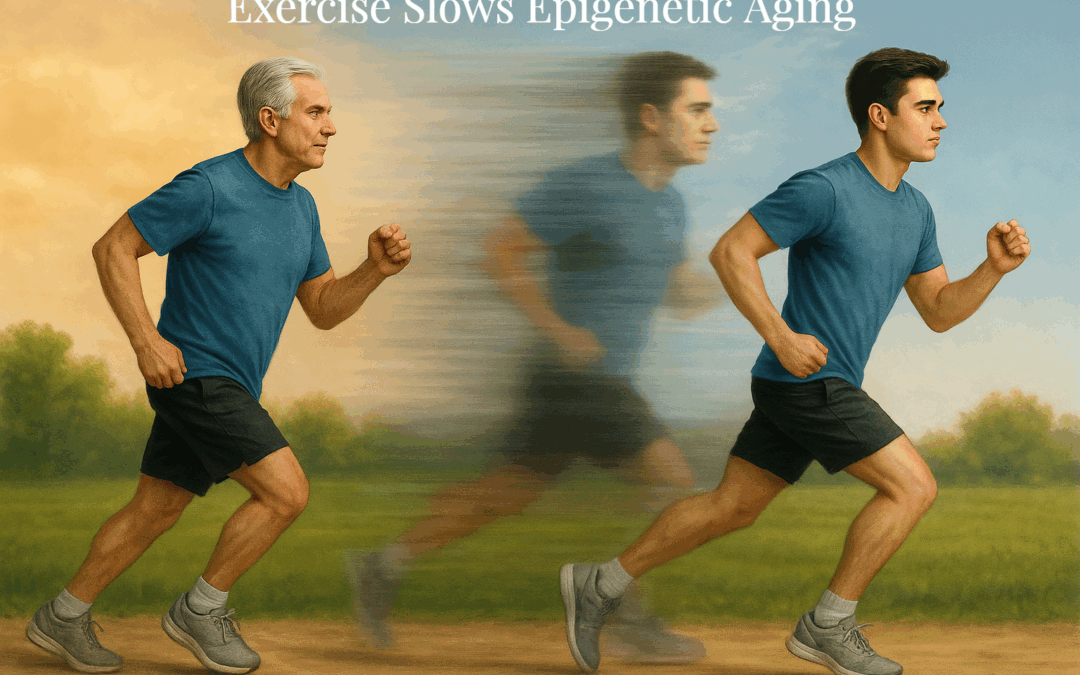
Want to stay biologically younger? Exercise slows epigenetic aging, keeping your cells youthful. Your epigenetic clock tracks biological age via DNA methylation, not just calendar years. As a geroprotector, exercise rejuvenates your epigenome and triggers hormesis, a healthy stress response. This blog reveals three ways exercise slows epigenetic aging, with simple tips to start today.
Table of Contents
How Does Exercise Protect Cells from Aging?
Exercise protects cells by balancing DNA methylation. Methylation controls gene expression, and imbalances speed up aging. Moderate-to-vigorous physical activity (MVPA) stabilizes methylation, slowing your epigenetic clock. Clocks like Horvath’s DNAmAge measure this.
Exercise also adjusts histones, proteins DNA wraps around. Tight histones block repair genes, accelerating aging. Physical activity loosens histones, boosting DNA resilience against oxidative stress and mitochondrial damage.
- Actionable Tip: Get 150–300 minutes of MVPA weekly. Brisk walking, cycling, or swimming counts. Short bursts, like stair climbing, also slow epigenetic aging.
Can Exercise Reverse Your Epigenetic Clock?
Exercise reverses epigenetic aging through fitness. Cardiorespiratory fitness (CRF) shows how well your body uses oxygen during exercise. Higher CRF links to younger DNA methylation patterns, making you biologically younger. This is epigenomic rejuvenation.
Mitochondria power cells but produce reactive oxygen species (ROS). Exercise strengthens mitochondria, turning ROS into repair signals. This rejuvenates your epigenome, slowing biological aging.
- Actionable Tip: Add high-intensity interval training (HIIT) 1–2 times weekly. Try 30–60 seconds of sprinting, followed by 1–2 minutes of walking. This boosts CRF and reverses epigenetic aging.
How Does Hormesis Make Exercise Anti-Aging?
Hormesis strengthens cells via controlled stress. Vigorous exercise activates pathways like AMPK and sirtuins, boosting DNA repair, mitochondrial growth, and antioxidants. Unlike light activity, intense workouts like HIIT or weightlifting trigger strong hormetic responses.
Balance is key. Eustress (good stress) from challenging workouts slows aging, while distress from overtraining harms cells. Hormesis follows an inverted U-curve: the right intensity maximizes anti-aging benefits.
- Actionable Tip: Aim for 75–150 minutes of vigorous exercise weekly, like three 25-minute sessions of running or resistance training. Start slowly to avoid injury.
Exercise Slows Epigenetic Aging Summary
Exercise slows epigenetic aging by protecting cells, reversing your epigenetic clock, and using hormesis. MVPA, HIIT, or weightlifting can keep you biologically younger. Start with 150 minutes of moderate or 75 minutes of vigorous exercise weekly. Ready to slow aging? Move your body today!
Reference: Kawamura, T., Higuchi, M., Radak, Z., & Taki, Y. (2025). Exercise as a geroprotector: focusing on epigenetic aging. Aging. doi:10.18632/aging.206278
See also – AP2A1 Protein May Hold the Key to The Fountain of Youth and Exercise Upregulates Hsp60 and Supports Mitochondrial Function